
Is Hawaiʻi Volcanoes National Park worth visiting after dark? Absolutely! From the possibility of seeing Kīlauea’s red-orange volcanic glow to stargazing beneath the Big Island’s night sky, the park offers a completely different experience after sunset.
But visiting at night takes a little more planning than a daytime trip. The temperatures can be surprisingly cold, some viewing areas require walking in near-total darkness, and volcanic activity can change without much warning.
Our Big Island bed and breakfast is just 2 minutes from the park, and we often help guests plan an evening visit. Here’s what you should know before visiting Hawaiʻi Volcanoes National Park at night.
Can You Visit Hawaiʻi Volcanoes National Park at Night?
Hawaiʻi Volcanoes National Park is open 24 hours a day, seven days a week, including holidays. You can enter the park after sunset, although individual facilities, roads, trails, and viewing areas may have different hours or temporary closures. You don’t need a reservation for general park entry, but regular entrance fees still apply.
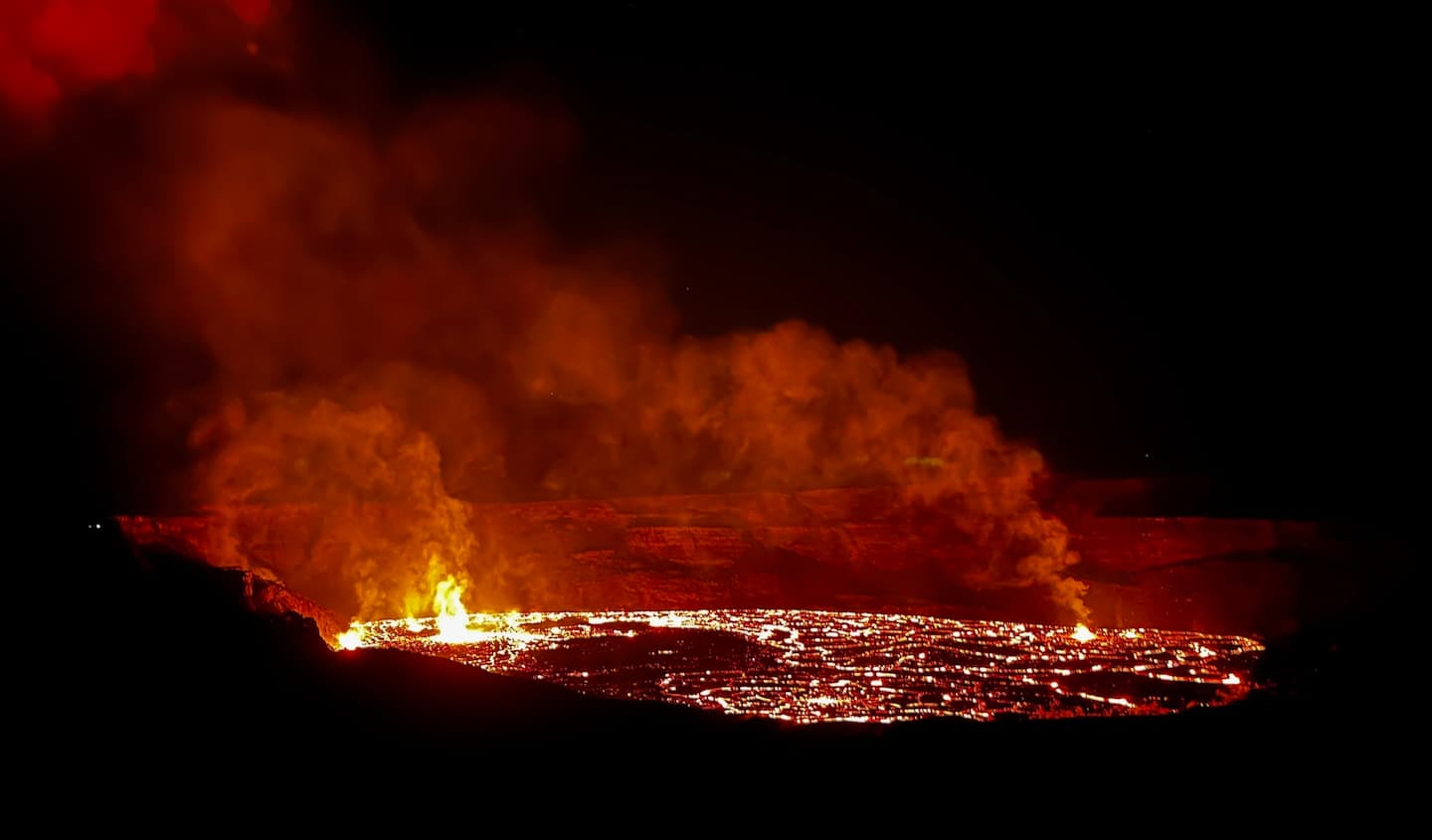
The biggest difference between a daytime and nighttime visit is visibility. During the day, you can appreciate the size of Kīlauea’s caldera, the surrounding volcanic landscape, and the steam rising from the ground. After dark, those details become harder to see, but an active eruption may illuminate the crater and surrounding sky.
What Is the Best Time to Visit Kīlauea After Dark?
We usually recommend arriving at the park 45 minutes to an hour before sunset rather than waiting until it’s completely dark.
This gives you time to find parking, get oriented, and walk to a designated overlook while there’s still some daylight. You can watch the evening colors settle over the caldera as the sky gradually darkens.
If Kīlauea is actively erupting, this timing also lets you experience the changing view. You might begin with a clear look at the crater walls and surrounding landscape, then watch the glow become more noticeable as darkness falls.
Arriving early can make parking easier, although popular overlooks can still be crowded during an eruption. The National Park Service warns that eruption viewing can cause significant traffic congestion, especially during evening hours.
Local tip: Plan Your Dinner Ahead of Time. Village dining options are limited and most kitchens close early, often by 7:30 or 8:00 PM. If you plan to stay in the park late, eat an early dinner in Volcano Village around 5:00 PM or pick up a takeaway meal beforehand.
If you do get hungry after dark inside the park, head to Kīlauea Military Camp (KMC). While it is located on military grounds, its facilities are open to the general public. Their 10-Pin Grill is the best spot for late-night food. They serve burgers, pizza, and casual fare daily until 10:00 PM (last food order taken at 9:30 PM). Lava Lounge Bar & Grill is great for a sit-down drink and light bites. Food is served until 8:00 PM nightly, and they host live music on Friday and Saturday evenings starting at 6:00 PM.
Where Are the Best Places to View Kīlauea at Night?
Several designated overlooks around Kīlauea’s summit offer views into the caldera. The best location depends on current volcanic activity, weather, and which areas are open.
Kīlauea Overlook
Located along Crater Rim Drive West, Kīlauea Overlook offers broad views into Kīlauea’s summit caldera. The overlook is accessible from a designated parking area, and you can enjoy the view without committing to a long hike.
If volcanic activity is occurring in Halemaʻumaʻu crater, this can be an excellent place to watch from a safe distance.
There are also additional viewpoints along the nearby Crater Rim Trail. However, we recommend sticking to the established overlook after dark unless you’re familiar with the trail and have confirmed current access.
Wahinekapu and the Steam Vents
Wahinekapu (Steaming Bluff), near Kūkamāhuākea (Steam Vents) along Crater Rim Drive West, offers sweeping views of the caldera, with steam rising from the surrounding volcanic landscape. The designated viewing area is approximately 500 feet from the Steam Vents parking area.
Uēkahuna Overlook
Located at the end of Crater Rim Drive West, approximately 2.8 miles from the park entrance, Uēkahuna offers panoramic views of Kīlauea’s caldera and Halemaʻumaʻu crater.
The observation deck and west overlook are approximately 200 feet from the parking area. Restrooms and other visitor amenities are available, making this a practical option for travelers who prefer not to walk far after dark.
Uēkahuna is also culturally significant. It is a sacred place in Native Hawaiian tradition, so please respect the landscape and any cultural practices taking place during your visit.
Our advice: Choose one primary viewing area and have a backup in mind. You don’t need to spend the entire evening driving from overlook to overlook, especially when roads and parking areas are busy.
Is Hawaiʻi Volcanoes National Park Good for Stargazing?
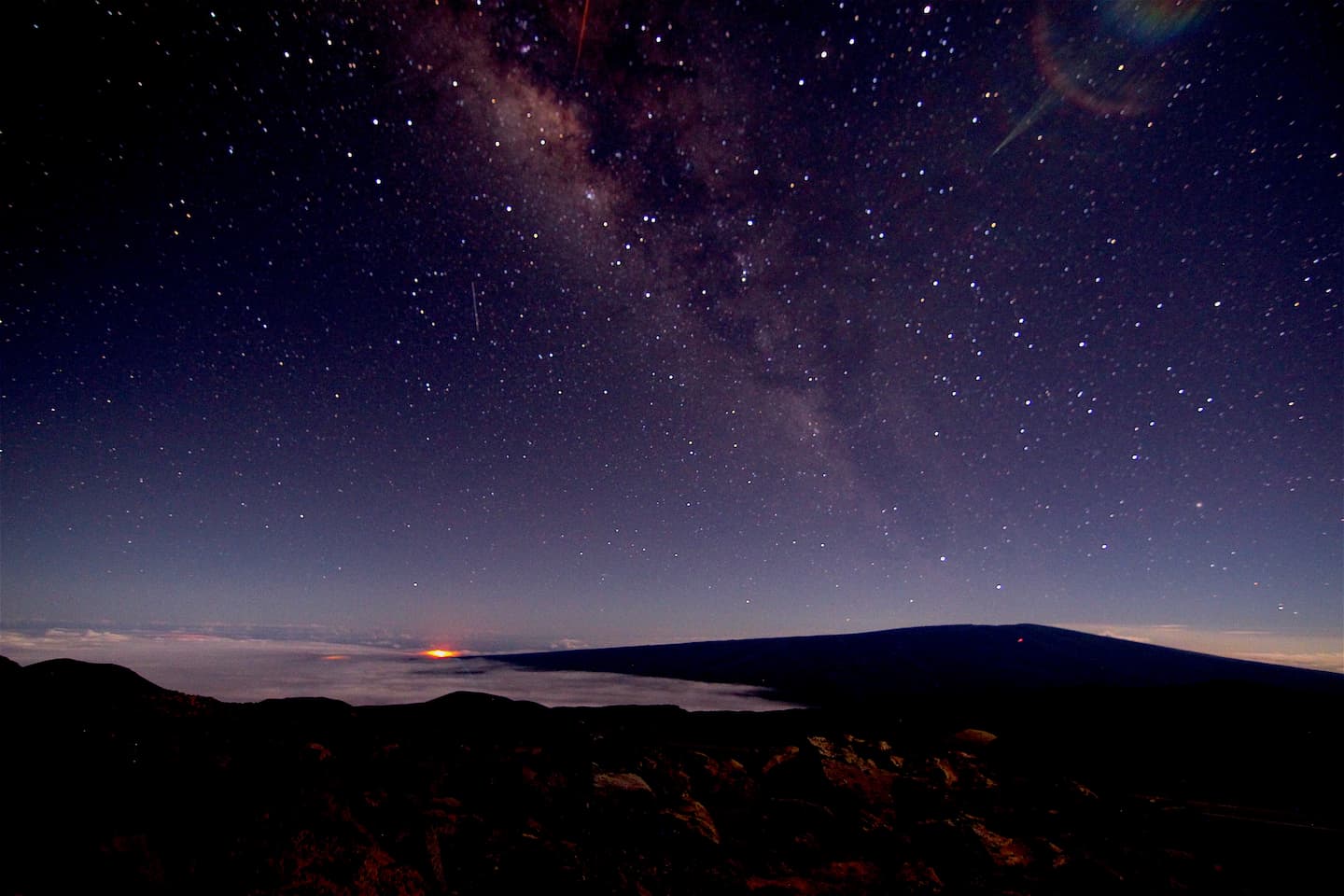
The Big Island’s remote location in the Pacific and relatively low light pollution make it one of the best places for stargazing in Hawaiʻi. On a clear evening, you can see countless stars, and depending on the season, the Milky Way may be visible stretching overhead.
A few tips for a better stargazing experience:
- Choose a clear night. Clouds, mist, and rain can quickly obscure the stars at Kīlauea’s summit.
- Check the moon phase. A night with little moonlight generally offers better views of faint stars and the Milky Way.
- Bring a red-light flashlight. Red light helps preserve your night vision while allowing you to see where you’re walking.
- Give your eyes time to adjust. Spend 20 to 30 minutes away from bright lights before expecting to see the fainter stars.
- Stay in designated areas. Don’t wander onto unfamiliar trails or lava fields in the dark looking for a better view.
How Cold Does Hawaiʻi Volcanoes National Park Get at Night?
This is probably the biggest surprise for guests visiting from the warmer parts of the Big Island.
Kīlauea’s summit sits at approximately 4,000 feet above sea level. Temperatures can be considerably cooler than along the coast, and the combination of wind, mist, and rain can make an evening outdoors feel even colder. Guests arriving from a sunny afternoon at the beach are often surprised to find temperatures in the 50s, with wind making it feel colder.
What Should You Bring for a Nighttime Visit?
You don’t need specialized hiking equipment for a short visit to a designated overlook, but a few essentials will make the experience much more comfortable.
- Flashlight or headlamp: Don’t rely entirely on your phone’s flashlight. Some areas are extremely dark once you leave the parking lot.
- Warm jacket and layers, including long pants: Temperatures can drop quickly after sunset.
- Rain jacket: Weather conditions can change during your visit.
- Sturdy, closed-toe shoes: Even short paths may have uneven surfaces or loose gravel.
- Water and a snack: Bring what you need rather than counting on nearby services being open late.
- Charged phone: Useful for checking updates, but download park information in advance in case connectivity is limited.
One thing we want to emphasize is just how dark the park can get. Away from parking areas and other lights, there may be very little illumination. A headlamp makes it easier to see where you’re stepping while keeping your hands free. Be considerate of other visitors and avoid shining bright lights directly toward people enjoying the view.
Is It Safe to Visit Hawaiʻi Volcanoes National Park After Dark?
Yes, visitors can enjoy designated areas after dark, but it’s important to understand that Kīlauea is an active volcano with real hazards.
The National Park Service maintains established viewing areas to help visitors observe volcanic activity from safer locations. Never cross barriers, enter closed areas, or approach crater edges to get a better photograph.
During some eruptions, airborne volcanic ash and Pele’s hair, tiny strands of volcanic glass, can also become hazards. Both can irritate your eyes, skin, and respiratory system. Never touch or collect Pele’s hair, and follow NPS guidance about limiting exposure and using protective clothing or equipment when needed.
Volcanic gases are another concern. Sulfur dioxide and other volcanic emissions can create unhealthy air conditions, particularly for people with respiratory or heart conditions, pregnant visitors, infants, and young children.
Check the park’s official safety guidance and current air quality information before visiting. Follow posted warnings and ranger instructions, even if conditions appear calm.
We also recommend keeping nighttime plans relatively simple. Enjoy the views from an established overlook rather than attempting an unfamiliar hike in the dark.
Remember that Kīlauea is a sacred landscape in Native Hawaiian culture. Be respectful of the land and other visitors, and take time to appreciate the setting without unnecessary noise or bright lights.
What If There’s No Lava to See?
Don’t assume that visiting after dark guarantees an eruption or even a visible glow.
Kīlauea has experienced periods of intermittent eruptive activity, with pauses between episodes. During those pauses, there may be little or no visible lava, even though the volcano remains active.
If you’re hoping to see lava, check the National Park Service eruption viewing updates and the USGS Hawaiian Volcano Observatory for the latest volcanic activity.
If the volcano is quiet, consider visiting the summit during daylight instead. You’ll have a better view of the enormous caldera, surrounding volcanic features, and trails.
Why Staying in Volcano Village Makes Nighttime Visits Easier
At Volcano Village Estates, we’re less than a mile from the park entrance. That means you can spend the day exploring the Big Island, return to your cottage or bungalow for a break, and head back to the park around sunset.
If the weather changes or volcanic activity pauses, you haven’t committed to a long nighttime drive back to Hilo or Kona. And if conditions are especially interesting during your stay, being nearby makes it easier to adjust your plans.
You don’t have to see everything in one visit, and sometimes the best evening is simply watching the last light fade over Kīlauea before returning to the quiet rainforest.
Book your stay and plan your night visit to Hawaii Volcanoes National Park.